
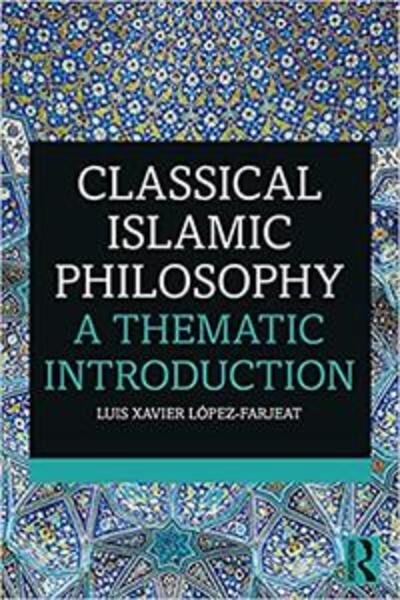
Classical Islamic Philosophy; A Thematic Introduction, Luis Xavier López-Farjeat
-About this book
This thematic introduction to classical Islamic philosophy focuses on the most prevalent philosophical debates of the medieval Islamic world and their importance within the history of philosophy. Approaching the topics in a comprehensive and accessible way in this new volume, Luis Xavier Lopez-Farjeat, one of the co-editors of The Routledge Companion to Islamic Philosophy, makes classical Islamic philosophy approachable for both the new and returning student of the history of philosophy, medieval philosophy, the history of ideas, classical Islamic intellectual history, and the history of religion. Providing readers with a complete view of the most hotly contested debates in the Islamic philosophical tradition, Lopez-Farjeat discusses the development of theology (kalām) and philosophy ( falsafa) during the ʿAbbāsid period, including the translation of Aristotle into Arabic, the philosophy and theology of Islamic revelation, logic and philosophy of language, philosophy of natural science, metaphysics, psychology and cognition, and ethics and political philosophy. This volume serves as an indispensable tool for teachers, students, and independent learners aiming to discover the philosophical problems and ideas that defined the classical Islamic world.
• Offers readers a broad, thorough view of the history of Islamic philosophy by using a thematic approach.
• Traces the dialogues between philosophers and theologians about important and controversial topics.
• Offers both historical descriptions of the key debates in classical Islamic philosophy and current interpretations by contemporary scholars.
• Includes extensive lists for further reading at the end of each chapter, directing curious students to the best avenues for further research.
-Contents
Introduction 1
1 The Context 5
1. The Origins of Islam 6
2. From the First Caliphs (Rāshidūn) (632–661) to the
Umayyad Era (661–750) 9
3. The ʿAbbāsid Period 14
4. The Transmission of Foreign Knowledge Into Islamic
Lands 17
Further Reading 19
2 The Configuration of Philosophy in the Islamic
Milieu: The Translation Movement 28
1. The Translation Movement: From Greek Into Syriac Into
Arabic 29
2. Translation of Greek Philosophy into Arabic 32
3. Other Sources for Translators, Translations, and Philosophers:
Miskawayh and S.āʿid al-Andalusī 39
4. The Transmission of Aristotle’s Logical Treatises 43
5. The Connection Between Logic and Other Disciplines:
Jurisprudence and Theology 45
Further Reading 50
3 Theologians and Philosophers on Islamic Revelation 52
1. The Muʿtazilites and Rationalism in Islam 54
2. The Ashʿarites, the Māturīdītes, and the Recovery of the
Tradition 59
- Religious Issues in Philosophy 65
3.1 al-Kindī and the Muʿtazilite Theology 66
3.2 al-Fārābī: Understanding Religious Matters
Philosophically 69
3.3 Ibn Sīnā on God, the Divine Attributes, and
Determinism 72
4. The Controversies Between al-Ghazālī and Ibn Rushd 76
5. A Later Critical Reaction to Philosophy: Ibn Taymiyya 84
Further Reading 87
4 The Classification of the Sciences, Logic, and Language 89
1. The Structure of Sciences and the Methods They Employ 91
1.1 al-Kindī and On the Quantity of Aristotle’s
Books 91
1.2 al-Fārābī and the Enumeration of the Sciences 96
1.3 The Epistles of the Brethren of Purity 100
1.4 Ibn Sīnā and the Epistle on the Divisions of the
Rational Sciences 103
2. Logic and Language 104
2.1 al-Fārābī’s Logic and Philosophy of Language 104
2.2 The Aristotelian–Fārābīan–Avicennian Logical
Tradition 107
3. Theory of Argumentation: Dialectic and Demonstration 108
3.1 al-Fārābī on the Proper Methods for Philosophical
Argumentation 109
3.2 Ibn Sīnā on Philosophical Demonstrations 113
3.3 Ibn Rushd on the Demonstrative Syllogism 117
4. Rhetoric and Poetics 118
4.1 al-Fārābī on Rhetorical Elocutions and Poetic
Images 120
4.2 Ibn Sīnā on Rhetoric and the Poetic Syllogism 123
4.3 Ibn Rushd on the Art of Persuasion and the Educational
Role of Poetry 125
Further Reading 128
5 Philosophy and the Natural Science 130
1. The Eternity of the World and Creation Ex Nihilo 132
1.1 Greek Background on the Discussion of the Eternity of
the World 133
1.2 Islamic Approaches to the Creation of the World 134
1.3 al-Fārābī and Ibn Sīnā on the Eternity of the
World 136
1.4 Ibn Rushd on the Eternity of the World 139 - Nature and Its Characteristics 143
2.1 Nature as an Active or Passive Principle 144
2.2 Ibn Sīnā and Nature as First Principle of Motion 146
2.3 Ibn Rushd and Nature as Something Self-Evident 149
2.4 Ibn Rushd Against Ibn Bājja’s Views on Motion in the
Void 152
2.5 Non-Aristotelian Views about Nature: Abū Bakr
al-Rāzī and Fakhr al-Dīn al-Rāzī 154
3. The Constitution of the Natural World 156
3.1 Islamic Atomism 157
3.2 Islamic Philosophers Against Atomism 160
3.3 Islamic Philosophers and the Doctrine of Minima
Naturalia 162
4. The Nature of Living Beings 163
4.1 Atomistic Conceptions of the Soul 164
4.2 Philosophical Approaches to the Soul 165
4.3 al-Fārābī and Ibn Sīnā on the Soul and Its
Faculties 166
4.4 Ibn Bājja and Ibn Rushd on the Soul and Its
Faculties 171
Further Reading 174
6 Metaphysics in the Islamic Philosophical Context 177
1. The Subject Matter of Metaphysics 179
1.1 From Metaphysics as Theology to Metaphysics as
Ontotheology 179
1.2 Metaphysics of Being or Metaphysics of Substance 181
2. Key Metaphysical Concepts 184
2.1 Thing, Essence, and Existence 185
2.2 Suhrawardī and Ibn Rushd Against Ibn Sīnā’s
Metaphysical Concepts 188
3. Primary and Secondary Causality 192
3.1 Ibn Sīnā’s Innovations on the Understanding of
Causality 193
3.2 Causation and Determinism in Ibn Sīnā and Ibn
Rushd 196
4. The Metaphysics of God 198
4.1 al-Kindī and al-Fārābī on God as First Cause 199
4.2 Ibn Sīnā’s Proofs for the Existence of God 201
4.3 Ibn Rushd’s Arguments for the Existence
of God 203
Further Reading 205
7 Psychology and Theories of Cognition 207
1. Theories of the Soul 209
1.1 al-Kindī and the Soul as an Incorporeal Substance 209
1.2 al-Fārābī on Cosmology, Biology, and the Origin of the
Soul 212
1.3 Ibn Sīnā and Suhrawardī on the Origin of the
Soul 214
1.4 Ibn Bājja and Ibn Rushd on the Nature of the
Soul 220
2. Faculties of the Soul 222
2.1 al-Kindī’s Characterization of the Faculties of the
Soul 223
2.2 al-Fārabī and the Relevance of the Imaginative
Faculty 226
2.3 Ibn Sīnā and Suhrawardī on Sense Perception 228
2.4 Ibn Bājja and Ibn Rushd on Sense Perception 232
3. Soul, Body, and Self-Awareness 235
4. Doctrines on the Intellect 240
4.1 al-Kindī’s and al-Fārābī’s Treatises on the Intellect 241
4.2 Ibn Sīnā on Abstraction Versus Emanationism 246
4.3 Theories of the Intellect in al-Andalus: Ibn Bājja and
Ibn Rushd 249
Further Reading 252
8 Ethics and Political Philosophy 255
1. Islamic Ethics in Theological Context 256
1.1 The Muʿtazilites on Moral Values 258
1.2 The Ashʿarites on Moral Values and Divine
Command Theory 259
2. Philosophical Ethics and Human Happiness 261
2.1 al-Kindī’s and Abū Bakr al-Razī’s Ethics 263
2.2 Miskawayh and Islamic Ethics: The Refinement of
Character 265
2.3 al-Fārābī on the Nicomachean Ethics: Directing
Attention to the Way to Happiness 268
2.4 Ibn Sīnā on Ethics and Prophetic Law 272
2.5 Ibn Rushd on the Virtues and the Connection Between
Ethics and Politics 275
3. Political Philosophy 278
3.1 al-Fārābī on the Different Kinds of Associations 278
3.2 al-Fārābī on Political Happiness 281
3.3 An Alternative Way to Happiness: Isolation in Ibn
Bājja and Ibn T.ufayl 284
3.4 Ibn Rushd on the Ideal City and the Reality of Political
Regimes 289
- Politics and Religion 291
4.1 al-Fārābī on the Virtuous Ruler and the Virtuous
Religion 291
4.2 Philosophical Theories of Prophecy: al-Fārābī, Ibn Sīnā,
and Ibn Rushd 296
4.3 al-Fārābī and Ibn Rushd on Jihād 302
Further Reading 308
Bibliography 311
-Caractéristiques
Date de parution:11 août 2021
Éditeur : Routledge
Langue : Anglais
NB.de pages : 368 pages
ISBN-10 : 1138229482
ISBN-13 : 978-1138229488
Poids de l’article : 505 g
Dimensions : 15.19 x 22.91 cm





Reviews
There are no reviews yet.