
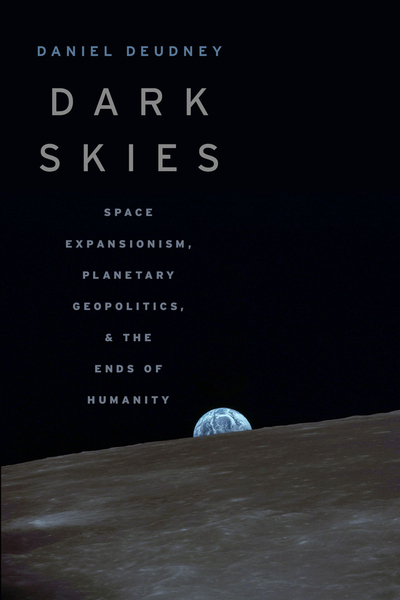
Dark Skies,Space Expansionism, Planetary Geopolitics, and the Ends of Humanity,DANIEL DEUDNEY
About this book
Space is again in the headlines. E-billionaires Jeff Bezos and Elon Musk are planning to colonize Mars. President Trump wants a « Space Force » to achieve « space dominance » with expensive high-tech weapons. The space and nuclear arms control regimes are threadbare and disintegrating. Would-be asteroid collision diverters, space solar energy collectors, asteroid miners, and space geo-engineers insistently promote their Earth-changing mega-projects. Given our many looming planetary catastrophes (from extreme climate change to runaway artificial superintelligence), looking beyond the earth for solutions might seem like a sound strategy for humanity. And indeed, bolstered by a global network of fervent space advocates-and seemingly rendered plausible, even inevitable, by oceans of science fiction and the wizardly of modern cinema-space beckons as a fully hopeful path for human survival and flourishing, a positive future in increasingly dark times. But despite even basic questions of feasibility, will these many space ventures really have desirable effects, as their advocates insist? In the first book to critically assess the major consequences of space activities from their origins in the 1940s to the present and beyond, Daniel Deudney argues in Dark Skies that the major result of the « Space Age » has been to increase the likelihood of global nuclear war, a fact conveniently obscured by the failure of recognize that nuclear-armed ballistic missiles are inherently space weapons. The most important practical finding of Space Age science, also rarely emphasized, is the discovery that we live on Oasis Earth, tiny and fragile, and teeming with astounding life, but surrounded by an utterly desolate and inhospitable wilderness stretching at least many trillions of miles in all directions. As he stresses, our focus must be on Earth and nowhere else. Looking to the future, Deudney provides compelling reasons why space colonization will produce new threats to human survival and not alleviate the existing ones. That is why, he argues, we should fully relinquish the quest. Mind-bending and profound, Dark Skies challenges virtually all received wisdom about the final frontier.
-CONTENTS
List of Tables and Figures
Acknowledgments
Prologue: Machine Civilization and the Transformation of the Earth
PART ONE THE EARTH, TECHNOLOGY, AND SPACE
1.The Promise of Space Revisited
2.Questions, Debates, and Frameworks
PART TWO GEOGRAPHIC AND TECHNOLOGICAL HORIZONS
3.New Heavens, New Earth
4.Technological Imaginaries, Feasibilities, Syndromes, and Catastrophes
PART THREE SPACE EXPANSIONISM
5.Absolute Weapons, Lightning Wars, and Ultimate Positions
6.Limitless Frontiers, Spaceship Earths, and Higher Humanities
7.Superpower Restraints, Planetary Security, and Earth Identity
PART FOUR ASSESSMENT
8.Geography, Geopolitics, and Geohistory
9.Earth Space, Planetary Geopolitics, and World Governments
10.Solar Space, Island Earth, and the Ends of Humanity
Conclusion: Space for Earth
Notes
Index
-caractéristiques
Date de parution :24 juin 2020
Éditeur : OUP USA
Langue : Anglais
N.de pages : 424
ISBN-10 : 0190903341
ISBN-13 : 978-0190903343
Poids: 758 g
Dimensions : 23.62 x 4.32 x 16.51 cm



Reviews
There are no reviews yet.