
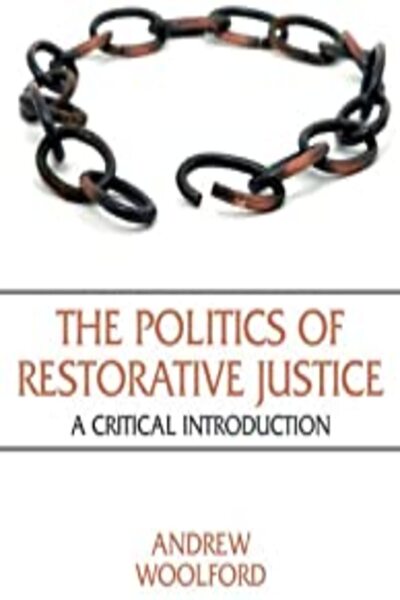
THE POLITICS OF RESTORATIVE JUSTICE: A Critical Introduction ,Andrew Woolford and Amanda Nelund
-Résumé
Restorative justice is an international movement that has made in roads into
justice policy in countries around the world, including the United States.
In this book, we seek to capture both global and local dimensions of this
movement.
The scholars and practitioners we draw on for insight originate from all parts
of the English-speaking world and beyond. Many of the examples, too, are global,
though many others are located in our home country:Canada.
The language may, at times, be in a Canadian vernacular: when we discuss the crown, for instance, know that we simply mean the state.
More important, the ideas, practices, and politics illustrated in these examples could
apply to any jurisdiction.
Wherever there is injustice, and wherever people work to imagine alternatives to somewhat rigid and formalized state processes, these visions of justice bump up against and collide with political realities that may either facilitate or thwart such efforts.
-CONTENTS
Preface to the US Edition 1
1 What Are the Politics of Restorative Justice? 5
Restorative Justice, 6
The Politics of Restorative Justice, 15
Politics and Justice, 23
Questions for Discussion, 24
2 What Events Trigger a Restorative Response? 25
Trigger Events, 27
Questions for Discussion, 47
3 Delineating the Restorative Justice Ethos 49
Traditions of Dispute Resolution, 50
Theories of Restorative Justice, 55
The Restorative Justice Ethos, 68
The Truth and Reconciliation Commission of Canada, 70
Questions for Discussion, 72
4 Restorative Justice Styles 73
Mediation and Community Mediation, 74
Victim Offender Reconciliation
and Victim Offender Mediation Programs, 76
Family Group Conferencing, 79
Circles, 81
Truth and Reconciliation Commissions, 88
Restorative Justice and Reparations for Crimes of
Mass Violence, 95
Grey Areas of Restorative Justice, 99
Does Restorative Justice Work? 101
Micro-Politics of Restorative Practices, 110
The Embodied Politics of Restorative Justice, 115
Questions for Discussion, 119
5 Constructing Restorative Justice Identities 120
Victims, 122
Offenders, 132
Communities, 143
Facilitators, 147
Opening Restorative Identities, 150
Questions for Discussion, 151
6 Restorative Justice Contexts 152
Level of Analysis, 152
Restorative Justice and Gender, 155
Restorative Justice and Race, 158
Restorative Justice and LGBTQ Communities, 159
Restorative Justice and Class, 160
Restorative Justice and Age, 162
Intersecting Structures of Domination, 165
Restoration and Neoliberal Politics, 166
Culture, Meaning, and the Politics of Restorative Justice, 173
Restorative Justice and Other-Than-Human Actors, 175
Questions for Discussion, 180
7 Restorative Justice Criticisms 181
Technical Criticisms, 182
Substantive Criticisms, 188
Criticism and the Politics of Restorative Justice, 193
Questions for Discussion, 194
8 Transformation and the Politics of Restorative Justice 195
Transformative Justice, 199
Recognition, Redistribution, and Representation, 200
The Politics of Transformation, 209
Final Thoughts, 220
Questions for Discussion, 220
References 221
Index 240
-carectéristiques
Date de parution :10 février 2020
N.de pages: 245 pages
ISBN-13 : 978-1626378926
dimensions : 5.75 x 0.5 x 8.75
édtion : Lynne Rienner Publishers, Inc.; 2nd edition
Language: : Englis





Reviews
There are no reviews yet.