
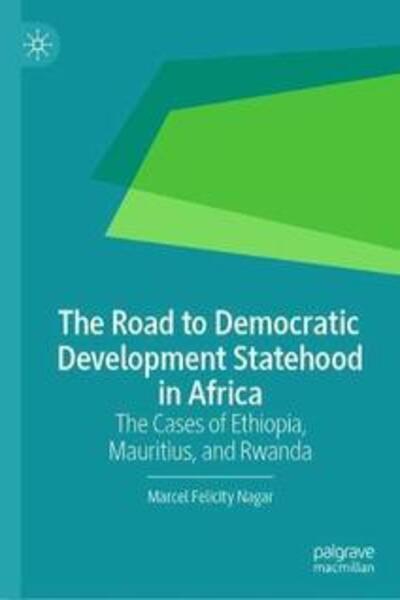
The Road to Democratic Development Statehood in Africa: The Cases of Ethiopia, Mauritius, and Rwanda , Marcel Felicity Naga
-About this book
Marcel Nagar’s book revives a commonly overlooked topic in development and political studies, that of the ‘Developmental State’. The strength of this book lies in its sensitivity of the prevailing conditions of the Post-Colonial African State in its application of the Democratic Developmental State model. Its unique state-societal approach provides a salient contrasting theoretical perspective for African states attempting to reconcile democracy and development in the 21st century, making it an excellent and thoughtful read for scholars, academics and practitioners alike.”
—Chris Landsberg, Professor and SARChI Chair of African Diplomacy and Foreign Policy at the University of Johannesburg, South Africa
“At a time when democratic reversals and autocratic democracy are on the increase, at a time when people are losing faith in the democratic process due to the disconnect between democracy and inclusive development, Marcel Nagar’s book provides an insightful contribution to understanding how a Democratic Developmental State can be built in Africa. The unique contribution of the book lies in the recognition that the state must be embedded in society before it can foster democracy and development.”
—Samuel Ojo Oloruntoba, Visiting Professor, Institute of African Studies, Carleton University, Ottawa, Ontario, Canada
-Contents
1 Introduction
References
Part I The (Democratic) Developmental State: Key Theoretical Concepts and Approaches
2 Key Conceptual Definitions
Unpacking Democracy and Development in Africa
Defining Development
Defining Democracy
Defining Anocracy
The Democracy–Development Nexus in Africa
Unpacking the Developmental State and Related Concepts
The Twentieth-Century Developmental State
The Twenty-First-Century Democratic Developmental State
Democratic Developmental Typologies: Dominant-Party and Coalitional
Developmental Patrimonialism: A Deviant Variant
References
3 The (Democratic) Developmental State: A Theoretical Overview—Underlying Internal Relations and Inherent Entrepreneurial Logic
Exploring Evolving State–Society Relations Within (Democratic) Developmental States
Defining State–Society Relations
State–Society Relations Within Twentieth-Century Developmental States
State–Society Relations Within Twenty-First-Century Democratic Developmental States
Investigating the Entrepreneurial Logic of the Developmental State
Defining State Entrepreneurship
The Entrepreneurial Logic of the East Asian Developmental State
Debunking the Neoclassical Economics Critique
References
Part II Mauritius: Africa’s Democratic Developmental Darling?
4 Colonial Island State Formation and Patterns of Democratic Development in Mauritius
Introduction
The Historical Evolution of Mauritius’ Democratic Development
French Colonial Rule (1721–1810)
British Colonial Rule (1810–1968)
Grand Morcellement and Shifting State–Society Relations (1870–1920)
The Terminal Phase of British Colonial Rule and It Accompanying Political Reforms (1930s–1960s)
Decolonisation and Independence (1968)
Democracy in Contemporary Mauritius (1968–2020)
Conclusion
References
5 Inclusive Economic Growth and Development of the African Cub-Tiger
Introduction
Phases of Mauritius’ Economic Growth Trajectory
The Growth of Export Processing Zones (EPZs) in Mauritius (1960s–1970s)
Adjustment, Stabilisation and Expansion of EPZ (1980s–1990s)
The Rise of the Tourism and Service Sectors and Value-Addition Within the Sugar Sector (1990s–2010s)
In Pursuit of a Second Mauritian Economic Miracle (2015–2020)
The Nature of State–Societal Relations and Inclusive Economic Growth in Mauritius
Trade Support Institutions (TSIs) and Networks Underpinning Mauritius’ Economic Growth
Participatory Governance Institutions and Processes in Mauritius
The Quest for Economic Democracy Within Mauritius
Conclusion
References
Part III Ethiopia: The ‘African Lion’: A Leader of the Continental Pack?
6 The Emergence of an Empire and Evolution of Federal Democracy in Ethiopia
Introduction
The Historical Evolution of Ethiopian Federal Democracy
The Ethiopian Empire (Twentieth Century)
Selassie: Modernised Monarchy and the End of an Empire (1930–1974)
The First Republic (1974–1991)
The Post-1991 Ethiopian Political Order
Conclusion
References
7 Inclusive Economic Growth and Development of the “African Lion”
Introduction
Meles Zenawi’s Democratic Developmental Dream Deferred?
The Pursuit of Inclusive Economic Growth and Development within an Agrarian Developmental State
Ethiopia’s Agricultural Developmental Policy
Participatory Governance and the Re-emergence of Agricultural Co-operatives
Conclusion
References
Part IV Rwanda: An African Model for Post-Conflict Democratic Development?
8 From PreColonial Conquest to Political Chaos and Back Again: The Development of Democracy in Rwanda
Introduction
The PreColonial Kingdom of Rwanda
German Colonial Rule (1895–1914)
Belgian Colonial Rule (1916–1959)
Decolonisation, Social Revolution and Independence (1959–1962)
The First Republic (1962–1973)
The Second Republic (1973–1994)
The Fall of the Second Republic: The Rwandan Civil War and Genocide (1990–1994)
The Post-1994 RPF Regime
Participatory Governance in the Post-1994 Political Order
Conclusion
References
9 Inclusive Economic Growth and Development of a War-Ravaged State
Introduction
Agricultural Development During the Second Republic
The Importance of Coffee to Rwanda’s Agricultural Sector
The 1989 Collapse of the Coffee Market, Structural Adjustment and the Civil War
Rwanda’s Post-1994 Development Strategy
“Party-Statals” and Private Sector Development
Tri-Star Investment (TSI)/Crystal Venture Ltd (CVL)
Horizon Group
Rwanda Investment Group (RIG)
Developmental Patrimonialism and Rwanda’s “Party-Statals”: A Critique
Rwanda’s Market Liberalisation Strategy
The Liberalisation of Rwanda’s Coffee Sector
Rwanda’s 2005 Land Law
Inclusive Economic Growth and Development Through “Home Grown Initiatives”
Ubudehe
Girinka Project
Umuganda
Imihigo
Assessing the Impact of “Home Grown Initiatives”
Conclusion
References
Part V Introducing the Concept and Model of the Developmental Civil Society (DCS)
10 The Concept and Model of the Developmental Civil Society (DCS): A Theoretical Bridge
Introduction
Untangling the Fundamental Institutional and Political Factors Behind Africa’s Postcolonial Development Woes
Another Fad? A Critique of the Democratic Developmental State Model in Africa
Introducing the Developmental Civil Society Developmental Civil Society (DCS)
Theoretical Assumptions
Conceptual Definition
Strategy and Structure
Strategy: Inter-sectoral and Coordinated Approach
Structure: Developmental Network Society
Conclusion
References
11 Conclusion: The Significance of a Developmental Civil Society (DCS) in a Post-Pandemic World
References
Index
-Caractéristiques
Date de parution:5 novembre 2021
Éditeur : Springer
Langue : Anglais
NB.de pages : 253 pages
ISBN-10 : 3030735222
ISBN-13 : 978-3030735227
Poids de l’article : 481 g
Dimensions : 14.81 x 1.75 x 21.01 cm






Reviews
There are no reviews yet.