
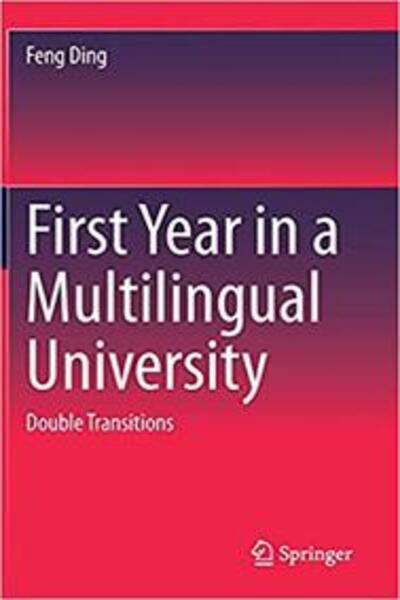
First Year in a Multilingual University: Double Transitions,Feng Ding
-About this book
Although both school–university transitions and cross-border transitions have been widely explored, comparatively little research has been conducted on those students who undergo both transitions at the same time.
This book reports on a longitudinal qualitative study investigating the major issues faced by nine Mainland Chinese students during their first year at a Hong Kong university from the perspective of learner autonomy. It argues that the school–university transition is especially challenging for students going through a cross-border transition at the same time, which usually involves a linguistic and cultural adjustment, and challenges their autonomy in three domains: managing their personal lives; academic learning; and English learning.
Adopting the perspective of autonomy enables us to better understand student transitions so that more appropriate support can be provided for this group. Given its scope, the book offers a valuable asset for educators at both the secondary and post-secondary levels, and underscores the need to help students bridge the gap between school and university, and thus advance along the continuum of autonomy more smoothly. It also has practical implications for students who are studying or intend to study abroad.
Contents
1 Introduction
Aims of the Study
Research Questions and Significance of the Study
2 Transition and Autonomy
School-University Transition
Recent Research on First-Year School-University Transition
Role of Autonomy in School-University Transition
Cross-Border Transition
Chinese Students in Anglophone Countries
Cross-Border Transition and Chinese Cultural Background
Comparison Between the Two Types of Transitions
Directions for Future Research on Transition
Learner Autonomy
Introduction
Definition and Dimensions of Autonomy
Nature of Autonomy and Autonomous Behaviors
Conditions for Autonomy
Autonomy and Educational Culture
Social Dimension of Autonomy
Measure of Autonomy
Directions for Future Research on Autonomy
Operationalization of Autonomy in the Present Study
Conclusion
3 Methodology: Multiple-Case Qualitative Study Research Setting
Hong Kong: The Broader Context
Hong Kong–Mainland China Relationship
Research Site
The Chinese Students and Scholars Association (CSSA)
Data Collection Methods
Interview as the Major Tool
Direct Observation
Written Documents
Participants
Locating the Participants
Initial Contact with Participants
Data Collection
First Phase
Second Phase
Third Phase
Fourth and Fifth Phases
Data Analysis
Framework of Data Analysis
Steps of Coding
Writing up of the Findings
Reflective Thinking
Building Trustworthiness
Researcher’s Role in the Study
Ethical Considerations
4 Profile of the Participants
Profile of the Nine Participants
Dora
Dora’s English Learning Experience
Fiona’s English Learning Experience
Fiona’s Expectations of University Lif
Hanna
Hanna’s English Learning Experiences
Hanna’s Expectations of University Life Claire
Claire’s English Learning Experience
Claire’s Expectations of University
Natalie
Natalie’s English Learning Experience
Natalie’s Expectations of University
Justin
Justin’s English Learning Experience
Justin’s Expectations of University
Anna
Anna’s English Learning Experience
Anna’s Expectations of University Life
Serena
Serena’s English Learning Experience
Serena’s Expectations of University Life
Cathy
Cathy’s English Learning Experience
Cathy’s Expectations of University
Summary
5 Becoming More Independent in Life
A Life that Requires More Independence
The Need to Take Care of Oneself in Daily Life
Life Is Less Structured in University
Balancing Social Activities and Study
Learning to Set Goals
Learning to Make Plans
Feeling Lonely and Lacking a Sense of Belonging
Social Context and Cultural Differences
School-University Difference in the Student Management System
Coping Strategies
Self-discipline
Self-reflection
Reading Books on Time Management
Social Support
Growth of Autonomy in Life Management
Autonomy in Life Management
Evidence of Growth
Summary
6 Becoming More Independent in Academic Learning
Selecting Their Own Courses and Learning Materials
Entering a New Field
Not Clear About the Evaluation Standard
New Assessments: Presentations and Group Work
Participants’ Development in Learning
Factors That Helped Them Develop
Students’ Hard Work and Self-Discipline
Social Support
Participants’ Unique Coping Strategies
Growth of Autonomy in Academic Learning
Conclusion
7 Becoming More Independent in a Multilingual Context
Entering an EMI Setting
Listening
Reading
Speaking
Academic Writing
Autonomy Development in the EMI Setting
Changing One’s Understanding of English
Multilingual Context Complicates the Situation
Perceived Need for English in a Multilingual C
Perceived Need for English in a Multilingual Context
Life Was Complicated by a New Language
Not Enough Opportunities for Speaking in English
Autonomous English Learning in a Multilingual Context
Conclusion
8 Discussion
School-University Transition and Autonomy
Cross-Border Transition and Autonomy
Emotional Side of Developing Autonomy During the Transitional Period
Interaction Among the Three Domains of Autonomy
Autonomy Development with Individualistic Features
Individual Differences
Different Priorities in University
Different Conceptions of Autonomy
Family Background and School Culture
Social Network and a Supportive Environment in University
Double Transition and the Three Domains of Autonomy as an Interpreting Framework
Summary
9 Conclusion
Contributions
A New Framework to Understand School-University and Cross-Border Transitions
Contribution to Autonomy Research
Contribution to the Understanding of Learning English in the EMI Context
Methodological Application and Educational Implication
Limitations
Future Research
Conclusion
-Caractéristiques
Date de parution:2 août 2021
Éditeur : Springer Verlag
Langue : Anglais
NB.de pages : 196 pages
ISBN-10 : 9811607958
ISBN-13 : 978-9811607950
Poids de l’article : 485 g
Dimensions : 15.6 x 1.42 x 23.39 cm


Reviews
There are no reviews yet.