
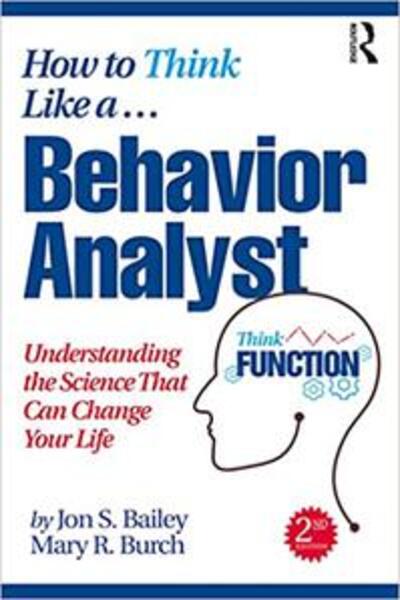
How to Think Like a . . . Behavior Analyst; Understanding the Science That Can Change Your Life; Second Edition, Jon S. Bailey
-About this book
How to Think Like a Behavior Analyst is a revolutionary resource for understanding complex human behavior and making potentially significant quality-of-life improvements.
Practical and clearly written, this second edition addresses basic questions like how behavior analysts work, why specific methods and procedures are used, what alternative « fad » treatments are, and more. The updated text answers 70 frequently asked questions about behavior analysis using an accessible question-and-answer format. Each question now includes a Quick Take, which is a simple and easy-to-read answer to the question, and then a more in-depth Technically Speaking answer that is more challenging. A brand-new chapter discusses ways of advancing one’s career in the field and how to go to graduate school and become board certified.
This text is written for all professionals concerned with behavior, including undergraduate students in psychology and behavior analysis, parents, teachers, employers, and employees. The book can easily be used as a supplement to primary texts in introductory psychology courses, and the exercises that follow each question can be used to stimulate lively discussion in role-play and other active learning situations.
-Contents
Introduction xxv
Part One : The Big Picture 1
Chapter One Basic Concepts and Principles 3
- What Is Behavior Analysis? 5
- What Does Analysis Mean in ABA, and How
Exactly Do You Analyze Someone’s Behavior? 13
- What Exactly Is Evidence-Based Treatment?
Isn’t There Evidence for All Treatments? 17
- Is Behavior Analysis Just Another Fad Treatment? 21
- So, Is It Correct That Behavior Analysts Don’t Have Theories; They Just Have Data? 24
- “Behavior Is a Function of the Environment.” What Does This Mean? 28
- Is Behavior Really All That Predictable? 33
Chapter Two: General Issues of Behavior Analysis 41
- What Is a History of Reinforcement? Do People
Have Their Own Unique Histories of Reinforcement? 43
- Is All Behavior Learned? 49
- Can You Really Replace a Behavior? Can Bad Habits Actually Be Broken? 53
- Can You Change Someone’s Personality? Should You Even Try? 57
Chapter Three The Science and Technology of Behavior Analysis 63
- Behavioral Research Methods Seem to Be Quite
Different From Those Used in Psychology. Is That Right? 65
- Can You Explain the Relationship Between Behavioral Research and Behavioral
Treatment? 68
- Is It Possible to Find the “Cause” of a Behavior? 72
- What Is the Connection of B.F. Skinner to Behavior Analysis? 76
Chapter Four :The Philosophy Behind Behavior Analysis 81
- What Is the Philosophy Behind Behavior Analysis? 83
- What Is the Behavioral Position on Freedom and “Free Will”? 87
- Are Behaviorists and Behavior Analysts the Same Thing? 91
- You Seem So Skeptical of Other Approaches. Can You Tell Me Why? 94
- Do Behavior Analysts Believe in Punishment? 98
Chapter Five : Applications of Behavior Analysis 105
- Who Provides Behavior-Analytic Services? 107
- Can I Use Behavioral Procedures to Improve
My Health or Enhance My Athletic Ability? 110
- Can You Use Behavior Analysis in “Real Life”? My Roommate (Spouse, Partner, Boyfriend,
Child, etc.) Is Driving Me Crazy; Can Any of This Help Me Get Along With Them? 114
- I’ve Been Told That Behavior Analysis Is the “Gold Standard” for Treatment of Children With
Autism. Why Is That? 118
- Can Parents or Foster Parents of a Child Be a Client? 121
- What Do Behavior Analysts Think About Changing Behavior in an Organization or Business Setting? 124
- What About Other Areas of Application Such as the Community? Does Behavior Analysis Work There, Too? 128
- I Took My Dog to Obedience School, but He Still
Jumps on People When They Come in the House.
Does This Mean That Behavior Shaping Doesn’t Work With Pets? 131
- It Seems That Many Behavior Analysts Are Saying They Want to Start Working With Animals. Is
Animal Behavior Consulting Something Behavior Analysts Could Do? 134
Chapter Six :The Behavioral Take on Other Fields of Psychology 141
- What Do Behavior Analysts Think of Counseling? 143
- What Is the Behavioral Position on Depression, Schizophrenia, Obsessive Compulsive Disorder,
and Other “Mental” Disorders? 148
- Can ABA Fix Problems Like Drug Addiction and Alcoholism? 152
- Do Behavior Analysts Believe in Psychotherapy? Is It Evidence Based? 156
- What Do Behavior Analysts Think About Cognitive Psychology? 160
- What Do Behavior Analysts Think About IQ? What About “Motivation” and “Emotions”? 163
- Do You Believe in “Brushing” Therapy and Weighted Vests? 167
- What About Alternative Treatments in General
for Children Diagnosed With ASD, Such as Facilitated Communication, Magic Mineral
Solution, Camel Milk, and Hyperbaric Oxygen Therapy? 172
Chapter Seven : Myths and the Media 185
- Some People Refer to Reinforcement as a Form of Bribery; Do You Agree With That? 187
- If You Use Behavioral Procedures Like Food Treats and Tokens With Your Kids, Will They Get
to Where They Only Work for Reinforcers? 190
- Can You Cure Autism With ABA? Is Your Goal to Make Children With ASD “Normal?” 194
- I Heard That Behavior Analysts Were Like the Tin Man From The Wizard of Oz—Heartless— Is That True? 197
- Do You Only Work With Children With Bad Behavior? 199
- I Saw Dr. Phil on TV One Time and He Sounded Like a Behavior Analyst. He’s Known for Asking,
“How’s That Workin’ for Ya’?” and Promotes “Commando Parenting.” What Do You
Think of Him? 203
- What About TV Shows That Depict Behavior Analysts? Is That an Accurate Picture of
What They Do? 208
- Are Behaviorists the Ones That Don’t Believe in Feelings and Emotions? 210
- ABA Stands for “Autism Behavior Analysis,” Right? 212
- What Is Your Position on Social Media? Is This a Good Way to Learn About ABA? 214
Part Two Becoming a Professional 221
Chapter Eight :Starting Your Career in Behavior Analysis 223
- How Do I Get Started in This Field? Do I Have to Be an RBT First? 225
- How Do I Become an RBT? Can I Use This Credential to Make Money on the Side Such as Babysitting? 227
- Can I Receive This Certification While I Am an Undergrad? 229
- What Kind of Jobs/Professional Opportunities Are Available? Where Can I Find Job Openings? 231
- What Is Supervision? Why Do I Have to Be Supervised? 233
- Do You Always Work One on One With Clients? 235
- What Does a Day in the Life of an RBT Look Like? 237
- What Does a Day in the Life of a BCBA Look Like? 240
Chapter Nine Advancing Your Career in ABA 245
- If I Get a BS in Psychology, Can I Be a BCBA? 247
- What Major Do I Need to Have to Be Admitted to an ABA Graduate Program so I Can Become a BCBA? 251
- If I Go to Graduate School in ABA, What Degree Will I Receive? Does the Major or
Field of Study Matter? 255
- What Does It Take to Become a Board Certified Behavior Analyst and What Do They Do? 257
- What Skills Are Involved in Being Successful in ABA? 260
- How Do I Find a Behavior Analyst for a Child, Adolescent, or Adult? 264
- What Are Some of the Areas in Which Behavior Analysts Can Work? 266
- Once I Have My Degree, How Do I Find an Ethical Place to Work? 268
Chapter Ten Ethics in Behavior Analysis 273
- Is There a Code of Ethics Behavior Analysts Must Follow? 275
- What Is a Dual Relationship and Why Is This a Problem? 281
- Is It Ethical to Try to Change Someone Else’s Behavior Without Their Permission? 284
- When You Are Introduced to Someone as a Behavior Analyst, What Do You Say When the
Person Asks if You Are Going to Analyze Their Behavior? 286
- I Think My Cousin Has Autism. Can I Tell My Aunt That He Needs ABA? 288
- If I Have Questions About Ethics Related to Behavior Analysis Who Can I Turn to? 290
- How Does One Report Unethical Conduct? 295
Glossary of Terms 299
Appendix—Behavioral Journals 307
Index 30
-Caractéristiques
Date de parution:8 mars 2022
Éditeur : Routledge
Langue : Anglais
N.B de pages : 344 pages
ISBN-10 : 0367750848
ISBN-13 : 978-0367750848
Poids de l’article : 505 g


Reviews
There are no reviews yet.