
-Résumé
Whenever leadership emerges within a group, there will be resistance to that leadership. Discontent may manifest in a number of ways, and action will always be determined by factors such as resource, numbers, time, space, and the legitimacy of the resistance. What, then, turns discontent into mutiny?
Mutiny is often associated with the occasional mis-leadership of the masses by politically inspired hotheads, or a spontaneous and unusually romantic gesture of defiance against a uniquely overbearing military superior. In reality it is seldom either and usually has far more mundane origins, not in the absolute poverty of the subordinates but in the relative poverty of the relationships between leaders and the led in a military situation. The roots of mutiny lie in the leadership skills of a small number of leaders, and what transforms that into a constructive dialogue, or a catastrophic disaster, depends on how the leaders of both sides mobilise their supporters and their networks.
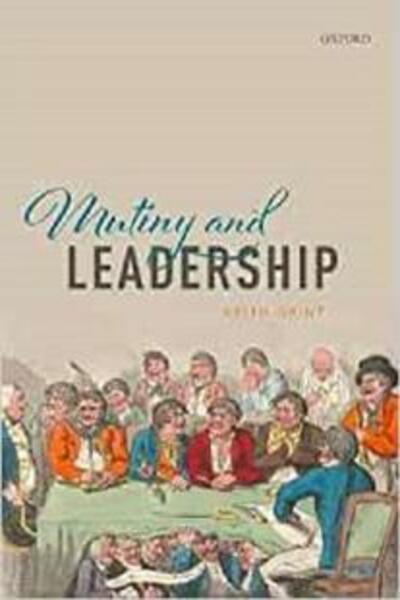
Using contemporary leadership theory to cast a critical light on an array of mutinies throughout history, this book suggests we consider mutiny as a permanent possibility that is further encouraged or discouraged in some contexts. From mutinies in ancient Roman and Greek armies to those that toppled the German and Russian states and forced governments to face their own disastrous policies and changed them forever, this book covers an array of cases across land, sea, and air that still pose a threat to military establishments today. The critical theoretical line also puts into sharp relief the assumption that oftentimes people have little choice in how they respond to circumstances not of their own making. If mutineers could choose to resist what they saw as tyranny, then so can we.
-Contents
Introduction
1. Rethinking Mutiny
Defining Mutiny
Refrains of Mutiny
Explaining Mutinies
2. Mutinies in Revolutionary Times
Spithead and the Nore, 1797
The Nore Mutiny
Hermione 1797
Potemkin 1905
3. Mutinies in War
The Christmas Mutiny 1914
Russia 1917
French Army 1917
The German Mutinies 1917–18
ANZAC 1916 and Étaples 1917
Salerno 1943
4. Mutinies after War
The British Forces 1918–19
Canadian Forces 1919
The Royal Air Force 1946
5. Mutinies in Civil Wars
English Civil Wars 1646–9
Krondstadt 1921
6. Mutinies and Ethnicity
The British West India Regiment 1801 & 1837
The Sepoy Mutiny, the Rebellion, and the 1st Indian War of Independence 1857–8
The Curragh 1914
Singapore 1915
The British Army Labour Corps & Foreign Battalions 1917–1918
Port Chicago 1944
The Royal Indian Navy 1946
7. Dystopian and Utopian Mutinies
The Batavia 1629
HMS Bounty
FFG Storozhevoy
8. Mutinies against Austerity
The Chilean Navy and Invergordon 1931
9. The Erosion, Breaking, and Betrayal of the Moral Economy: A Reflection on Mutinies, Mutineers, and Leadership
References
Index
-caractéristiques
Date de parution:15 avril 2021
Éditeur : OUP Oxford
Langue : Anglais
NB.de pages : 400 pages
ISBN-10 : 0192893343
ISBN-13 : 978-0192893345
Poids de l’article : 876 g
Dimensions : 18 x 3 x 25.5 cm



Reviews
There are no reviews yet.