
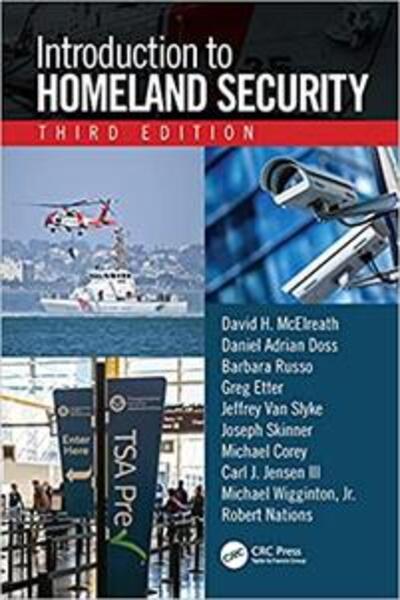
This new edition is completely updated and includes coverage of topics relevant to homeland security operations not covered in any other text currently available.
Key Features:
Explores the history and formation of the Department of Homeland Security, recent developments, as well as the role and core missions of core agencies within DHS
Outlines man-made threats, intelligence challenges, and intra-agency communication, planning, and operations Looks critically at the role of geopolitical dynamics, key international allies, and their influence on domestic policy and decision-making Covers the latest developments in programs, legislation, and policy relative to all transportation and border security issues.
Examines current issues and emerging global threats associated with extremism and terrorism Addresses natural and man-made disasters and the emergency management cycle in preparing for, mitigating against, responding to, and recovering from such events
Introduction to Homeland Security, Third Edition remains the premier textbook for criminal justice, homeland security, national security, and intelligence programs in universities and an ideal reference for professionals as well as policy and research institutes.
-Contents
Introduction to Homeland Security and Emergency Management 1
1.1 Introduction .. 1
1.2 Safety and Security . 3
1.3 Threats Are a Step Away and Often Walk among Us .. 4
1.4 Why Homeland Security and Emergency Management? .. 5
1.5 What Are Homeland Security and Emergency Management? .. 6
1.6 Emergency Management: A Key Element in Homeland Security Operations . .10
1.7 What Are the Threats and Dangers Facing Our Nation? . 12
1.8 When and Where Does Disaster Strike? . 13
1.9 Who Are the Responders, and What Is Their Role? .. 14
1.10 The Department of Homeland Security: A Brief Examination . 14
1.11 Chapter Comments and Summary.. 16
1.12 Key Terms .. 17
1.13 Thought and Discussion Questions .. 18
Notes . 18
References .. 19
2-Vital National Interests and the Defense of the Homeland 21
2.1 Introduction … 21
2.2 A Brief History and Reflection .. 22
2.3 Threats and Challenges to the Nation.. 23
2.4 Vital National Interests and Instruments of National Power .. 24
2.5 Foundations of a Nation … 25
2.6 Foundations of National Security .. 26
2.7 The Monroe Doctrine .. 27
2.8 Early Conflicts … 27
2.9 The Early Twentieth Century .. 28
2.10 World War II, Challenging the Spread of Communism, Superpower Emergence, and the Competing World Philosophies ..32
2.11 Intelligence and National Security … 33
2.12 World Organizations Promoting Peace: The League of Nations and the United Nations .. 34
2.13 Evolution of the Cold War .. 34
2.13.1 Containment ….. 35
2.13.2 Mutually Assured Destruction (MAD) .. 36
2.13.3 Containment and Continuation of MAD: Attempts to Isolate the Soviet Union … 38
2.13.4 Small Wars and the Domino Theory … 38
2.13.5 Détente … 39
2.13.6 Rollback … 40
2.13.7 Glasnost .. 41
2.14 The Complexity of the Modern World … 42
2.15 After the Cold War and the Emerging of a New World .. 44
2.16 Terrorism: Introduction to the New Threat to the United States .. 44
2.17 Desert Shield and Desert Storm … 47
2.18 The Shock and Impact of 9/11 … 48
2.19 Global War on Terrorism … 48
2.20 Role of the Military in Support of Homeland Security .. 49
2.21 Emerging Threats … 50
2.22 Homeland Defense and a New Type of Warfare .. 50
2.23 Chapter Comments and Summary… 51
2.24 Key Terms … 53
2.25 Thought and Discussion Questions … 53
Notes .. 53
References .. 55
3-Principal Hazards 57
3.1 Introduction .. 57
3.2 Overview of Domestic Safety and Security … 60
3.3 Major Incidents: A Brief Historical Examination .. 61
3.3.1 Natural Disasters … 61
3.3.1.1 New Madrid Earthquakes of 1811–1812 .. 61
3.3.1.2 Galveston Hurricane of 1900 … 62
3.3.1.3 San Francisco Earthquake of 1906 … 63
3.3.1.4 Hurricane Katrina … 64
3.3.2 Urban Disasters .. 65
3.3.2.1 Chicago Fire of 1871 . 65
3.3.2.2 Johnstown Flood of 1889 .. 66
3.3.3 Industrial Accidents: Domestic and International.. 67
3.3.3.1 Triangle Shirtwaist Factory Fire of 1911 .. 67
3.3.3.2 Texas City Explosion of 1947 .. 67
3.3.3.3 1989 Exxon Valdez Oil Spill .. 67
3.3.3.4 2010 Deepwater Horizon Oil Spill. 68
3.3.3.5 1984 Union Carbide Industrial Accident .. 68
3.3.3.6 1986 Chernobyl Nuclear Power Plant Explosion . 69
3.3.3.7 Fukushima Daiichi Earthquake, Tsunami, and Nuclear Disaster ….69
3.3.4 Epidemics … 70
3.3.4.1 Yellow Fever Epidemic of the 1800s .. 70
3.3.5 Terrorism . 71
3.3.5.1 The 1993 World Trade Center Attack . 71
3.3.5.2 Oklahoma City Bombing of 1995 .. 72
3.3.5.3 Terrorist Attacks of September 11, 2001 .. 72
3.4 Today’s Challenges .. 73
3.4.1 Droughts .. 73
3.4.2 Heat Waves .. 74
3.4.3 Tsunamis .. 75
3.4.4 Earthquakes.. 76
3.4.5 Volcanoes .. 79
3.4.6 Tornadoes . 80
3.4.7 Blizzards .. 80
3.4.8 Fires … 80
3.4.9 Floods .. 81
3.4.10 Hailstorms .. 82
3.4.11 Dust Storms . 82
3.4.12 Landslides .. 83
3.4.13 Sinkholes . 83
3.4.14 Cyclones .. 84
3.4.15 Whirlpools . 84
3.4.16 Limnic Eruptions .. 85
3.5 Aftermath of Incidents .. 85
3.6 Chapter Comments and Summary.. 87
3.7 Key Terms . 88
3.8 Thought and Discussion Questions . 88
Notes .. 88
References 92
4-Protection of the Homeland and the Establishment of the United States Department of Homeland Security 95
4.1 Introduction . 95
4.2 The Department of Homeland Security . 96
4.3 The Department of Homeland Security . 98
4.4 Federal Actions and Assistance in Disaster Response and Recovery . 100
4.5 Homeland Security Goals .. 101
4.6 Significant Homeland Security Presidential Directives . 102
4.7 Funding and Vision … 103
4.7.1 Safeguarding the Nation’s Transportation Systems . 104
4.7.2 Enhancing Cyber Security and Technology R&D 105
4.7.3 Strengthening Border Security and Immigration Services .. 107
4.7.4 Supporting State Homeland Security Activities . 109
4.8 The Organizational Structure and Mission of the Department of Homeland Security. 109
4.9 Department of Homeland Security Organizational Structuring and Components . 116
4.9.1 Directorate for National Protection and Programs .. 118
4.9.2 Directorate for Science and Technology . 119
4.9.3 Directorate for Management .. 120
4.9.4 Office of Policy.. 120
4.9.5 Office of Health Affairs .. 120
4.9.6 Office of Intelligence and Analysis .. 121
4.9.7 Office of Operations Coordination and Planning … 121
4.9.8 Federal Law Enforcement Training Center .. 122
4.9.9 Domestic Nuclear Detection Office .. 123
4.9.10 Federal Emergency Management Agency . 123
4.9.11 Transportation Security Administration .. 126
4.9.12 United States Customs and Border Protection 126
4.9.13 United States Citizenship and Immigration Services . 128
4.9.14 United States Immigration and Customs Enforcement 128
4.9.15 United States Coast Guard .. 129
4.9.16 United States Secret Service .. 131
4.9.17 Office of the Secretary of the Department of Homeland Security 134
4.9.18 Advisory Panels and Committees 136
4.10 Future of the Department of Homeland Security 137
4.11 Chapter Comments and Summary. 137
4.12 Key Terms .. 138
4.13 Thought and Discussion Questions .. 139
Notes .. 139
References .. 141
5- Homeland Security and Emergency Management: Function and Operations 143
5.1 Introduction .. 143
5.2 Resource Management and Utilization . 144
5.3 A Perspective of Homeland Security and Emergency Management . 145
5.4 Coordination and Standardization: The Backbone of Homeland Security Operations .. 146
5.5 Response .. 147
5.6 Department of Homeland Security Homeland Security
Operations Center .. 148
5.7 Protect: Disciplines, Functions, Operations .. 149
5.8 Intelligence as Related to Homeland Security: An Overview … 152
5.9 Strategic, Near-Term, and Operations Plans and Periods.. 156
5.9.1 Strategic Concepts .. 157
5.9.2 Near-Term Tactical Concepts .. 159
5.10 Concepts of Processes and Procedures . 160
5.10.1 Long-Term Strategic Processes . 160
5.10.2 Near-Term Tactical Processes .. 161
5.10.3 Operational Processes .. 163
5.11 Summary 163
5.12 Key Terms . 164
5.13 Thought and Discussion Questions .. 164
Notes . 164
References .. 166
6-The Partnerships of Homeland Security and Emergency Management 167
6.1 Introduction . 168
6.2 Why Are Partnerships Important? 168
6.3 An Overview of Partnerships . 169
6.4 The Whole Community Approach and the Challenges of
Building Response Partnerships .. 171
6.5 Building and Sustaining Partnerships . 172
6.6 Scope of Work .. 173
6.6.1 Emergency Operations Centers and National Response Framework .. 173
6.7 Planning, Training, and Equipping Partnerships .. 174
6.8 Partnerships … 176
6.8.1 Lessons from the Past: Hurricane Camille .. 177
6.9 Nongovernmental Organizations .. 178
6.9.1 The Role of Nongovernmental Organizations .. 181
6.9.2 Framework for NGOs .. 182
6.9.3 Volunteers . 184
6.10 Key Partnerships Organizations . 185
6.10.1 National Voluntary Organizations Active in Disaster 185
6.10.1.1 NVOAD Core Principles (Disaster, 2020) 186
6.10.2 Private Business and Industry .. 187
6.10.3 Faith-Based Organizations .. 188
6.10.4 Community Emergency Response Team . 190
6.10.5 Citizen Corps … 191
6.10.6 The Fire Corps .. 193
6.10.7 National Neighborhood Watch 193
6.10.8 The Medical Reserve Corps .. 194
6.10.9 The Civil Air Patrol (U.S. Air Force Auxiliary) .. 195
6.10.9.1 Homeland Security Role .. 196
6.10.10 The U.S. Coast Guard Auxiliary .. 198
6.10.11 Military Auxiliary Radio System … 201
6.10.12 Local Emergency Planning Committees … 202
6.10.13 The Private Sector . 203
6.11 International, National, and State Military Resources .. 204
6.12 Federal Regulations Related to Use of Military Resources . 205
6.12.1 Title 10 of the U.S. Code . 205
6.12.2 Defense Memoranda of Understanding
and Agreements .. 205
6.12.3 Purchasing Requirements .. 208
6.12.4 The Defense Industrial Reserve .. 208
6.12.5 U.S. Government Contracts and Foreign Awards . 210
6.13 Summary .. 211
6.14 Chapter Comments and Summary.. 212
6.15 Key Terms .. 213
6.16 Thought and Discussion Questions .. 213
References . 214
7-Disaster Preparedness and Mitigation Strategies 217
7.1 Introduction … 218
7.2 Where’s the Threat? The Event for Which We Prepare:Natural Disaster or Man-Made Events? .. 218
7.2.1 Natural Disasters . 219
7.2.2 Terrorism and Extremism . 220
7.3 Planning: Strategies and Operations .. 221
7.4 Community Response .. 222
7.5 State Response . 223
7.6 Federal Response . 223
7.7 Private and Nonprofit Sector . 223
7.8 Special Circumstances .. 224
7.9 Planning: The Challenges .. 227
7.10 Risk Management and Assessments.. 229
7.11 Threat Assessments . 230
7.12 Vulnerability Assessments . 231
7.13 Consequence Assessments .. . 232
7.14 Federal: Preventing Extremism and Terrorism and Enhancing Security 232
7.15 Federal: Ensuring Resilience to Disasters .. 233
7.16 Federal: Maturing and Strengthening the Homeland Security Enterprise .. .233
7.17 Federal: Comments Regarding the Budget . . 234
7.18 Hurricane Katrina: A Case Study . 236
7.19 Chapter Comments and Summary. 238
7.20 Key Terms . 239
7.21 Thought and Discussion Questions . 239
Notes .. 240
References . 240
8-Disaster Response, Recovery, and Resilience 243
8.1 Introduction 243
8.2 Brief Examination of Response and Recovery 245
8.3 Disaster Response Community Overview 246
8.4 Command and Control . 246
8.5 Information Management in a Disaster 248
8.6 The Disaster Frameworks . 249
8.7 The Role of FEMA .. 250
8.8 Human Sustenance—Food and Shelter . 251
8.9 Sheltering “In Place” … 252
8.10 NASA Disasters Program 252
8.11 The Economics of Response and Recovery 253
8.12 Insurance, Risk, and the Potential of Disaster .. 255
8.12.1 Flood Insurance.. 256
8.12.2 Fire Insurance. . 256
8.13 Disaster Declarations . 259
8.14 Considerations of Response and Recovery 261
8.15 Chapter Comments and Summary 263
8.16 Key Terms .. 263
8.17 Thought and Discussion Questions . 264
Notes 264
References . 266
9-Domestic Extremism: Threats, Threat Groups, and Terrorism 267
9.1 Introduction .. 268
9.2 What Is Domestic Terrorism? . 268
9.3 Domestic Terrorism: A Short Historical View .. 270
9.4 Domestic Terrorism and Threat Groups . 273
9.5 The Radical Right: A Variety of Perspectives . 274
9.6 Supremacy Groups .. 274
9.6.1 Ku Klux Klan … 275
9.6.2 Neo-Nazi and Aryan Movement .. 277
9.6.3 The Sovereign Citizens Movement . 279
9.6.4 Militias and the Militia Movement .. 280
9.6.5 Racist Skinheads … 281
9.6.6 Black Separatists . 281
9.6.7 Patriot Groups 282
9.6.8 Inspiration, Leaderless Resistance, Phantom Cell,and the Lone Wolf . 283
9.6.9 Right to Life: Revolutionary Reaction to Abortion .. 285
9.6.10 Other Organizations That Pose a Domestic Threat . 286
9.6.10.1 Narco-Terrorist Groups along the U.S. Border . . 286
9.7 The Radical Left: Ecological and Animal Rights . 286
9.7.1 Antifa and the Return of the Anarchist Movement . 288
9.8 Major Law Enforcement Agencies Battling Terrorism and Hate .. 289
9.8.1 Federal Agencies .. 289
9.8.2 State, Local, and Tribal Agencies .. 290
9.9 Nongovernmental Agencies Battling Terrorism and Hate . 292
9.9.1 Southern Poverty Law Center .. 292
9.9.2 The Anti-Defamation League .. 293
9.9.3 American Civil Liberties Union .. 294
9.10 Chapter Summary . 295
9.11 Key Terms .. 295
9.12 Thought and Discussion Questions .. 295
Notes 296
References … 300
10-International Terrorism and Extremism: Operations and Sustainment 303
10.1 Introduction .. 303
10.2 Understanding and Defining Terrorism and Extremism . 305
10.3 The Evolution of Terrorism and Extremism: A Brief Historical Perspective . 306
10.3.1 Tyrannicide .. 306
10.3.2 Early Examples of the Use of Terror .. 307
10.3.2.1 The Zealots … 307
10.3.2.2 The Assassins . 307
10.3.2.3 Thugees or Thugs . 307
10.3.3 Continuation of the Use of Terror . 308
10.3.3.1 Terrorism and the French Revolution .. 308
10.3.3.2 Gunpowder Plot (England) of 1605 … 309
10.3.4 Terrorism and Extremism in the Late Nineteenth and Early Twentieth Centuries, the Influence of Revolutions and Nationalism, and the Anarchist Movement . 310
10.3.4.1 The Propaganda of Deed and The Catechism of the Revolutionary . 310
10.3.4.2 Russia . 311
10.3.4.3 Bosnia.. 312
10.3.4.4 Violence and Extremism in Europe after World War I . 313
10.3.5 Anti-Colonialism, Terrorism, and Extremism after World War II . 313
10.3.5.1 Anti-Colonialism and Terrorism after World War II .. 314
10.4 Terrorism and Extremism in the Modern Era .. 319
10.5 An Overview of Terrorism and Extremism Internationally Today .. 320
10.5.1 Regional Terrorism and Extremism: The Middle East and Afghanistan .. 321
10.5.2 Regional Terrorism and Extremism: Europe .. 322
10.5.2.1 The United Kingdom . 322
10.5.2.2 Germany . 323
10.5.2.3 Spain … 324
10.5.3 Regional Terrorism and Extremism: Africa .. 324
10.5.3.1 Trans-Sahara Counterterrorism Partnership .. 325
10.5.3.2 The Partnership for Regional East Africa Counterterrorism .. 325
10.5.4 Regional Terrorism and Extremism: Asia . 325
10.5.5 Regional Terrorism and Extremism: Central and South America .. 327
10.5.5.1 Cuban Revolution (1952–1958) 327
10.5.5.2 Carlos Marighella 330
10.5.6 The Tupamaros of Uruguay . 331
10.5.7 Sendero Luminoso . 332
10.5.8 Revolutionary Armed Forces of Colombia .. 332
10.5.9 Mexico 333
10.6 Funding of International Terrorism and Extremism .. 334
10.6.1 Logistics of Funding Terrorism and Extremism 336
10.7 Narco-Terrorism .. 337
10.8 The Role of the Media and the Use of the Web .. 337
10.9 Response Strategies .. 340
10.10 Cyber Terrorism .. 340
10.11 The Twenty-First Century and the Struggle against Terrorism:Now and the Future .. 341
10.12 Operations against the Threat of Terror . 341
10.13 Summary .. 342
10.14 Key Terms .. 342
10.14.1 Terms.. 342
10.14.2 People . . 343
10.14.3 Organizations .. 343
10.14.4 Events .. 344
10.15 Questions and Discussions .. 344
References . 344
11-The Role of Intelligence in Homeland Security 349
11.1 Introduction . 350
11.2 What Is Intelligence? . 350
11.3 Contemplating Intelligence .. 351
11.4 The Intelligence Cycle . 353
11.5 The United States Intelligence Community: History .. 356
11.5.1 IC History: The Revolutionary War to World War II . 356
11.5.2 IC History: World War II and the Cold War . 357
11.5.3 IC History: Iraq to the Present .. 358
11.5.4 IC Success in the Struggle against International Extremism and Terrorism .. 359
11.6 The Modern U.S. Intelligence Community .. 359
11.7 State and Local Intelligence Efforts . 361
11.7.1 Intelligence-Led Policing/Law Enforcement .. 361
11.7.2 Fusion Centers . 362
11.8 Legal Guidelines Pertaining to Intelligence Collection.. 362
11.9 Foreign Intelligence Services… 363
11.10 The Function of Intelligence in Homeland Security .. 364
11.11 Intelligence Gathering versus Privacy .. 365
11.12 Intelligence Challenges for the New Century … 366
11.13 The Intelligence Partnership .. 368
11.14 Regional Information-Sharing Systems . 369
11.15 Chapter Comments and Summary.. 370
11.16 Key Terms .. 370
11.17 Thought and Discussion Questions .. 371
References .. 371
12-Protecting Our Nation’s Infrastructure: Border and Transportation Security ..375
12.1 Introduction .. 375
12.2 Overview: Border and Transportation Security . 376
12.3 An Overview of Transportation Security … 377
12.4 Historical Perspective: Aviation and Aerospace Security … 379
12.5 Modern Perspective: Aviation and Aerospace Security … 379
12.6 Additional Commentary: Aircraft Hijacking … 382
12.7 Historical Perspective: Maritime Security .. 383
12.8 Modern Perspective: Maritime Security .. 385
12.9 Historical Perspective: Mass Transit and Railway Security .. 388
12.10 Modern Perspective: Mass Transit and Railway Security . 389
12.11 Container and Cargo Security .. 393
12.12 The Mexican Border and Violence … 397
12.13 Human Trafficking … 398
12.14 Transportation and Border Security Initiatives … 399
12.14.1 Border Permeability … 400
12.14.2 Border Security: Immigration .. 400
12.14.3 Border Security: Searches .. 400
12.14.4 Border Security: U.S.-Mexican Border Fence . 402
12.14.5 Border Security: Aviation Surveillance and Reconnaissance . 402
12.15 Small Vessel Security Strategy … 402
12.16 Federal Flight Deck Officers … 402
12.17 Terrorist Watch List and the No-Fly List .. 403
12.18 Legislation Pertaining to Transportation and Border Security … 403
12.18.1 The Magnuson Act of 1950 …. 403
12.18.2 Ports and Waterways Safety Act of 1972 .. 403
12.18.3 Port and Tanker Safety Act of 1978.. 404
12.18.4 International Maritime and Port Security Act .. 404
12.18.5 Maritime Transportation Security Act of 2002… 404
12.18.6 Security and Accountability for Every Port Act of 2006 . 405
12.18.7 The Oil Pollution Act of 1990 … 405
12.18.8 The Illegal Immigration Reform and Immigrant Responsibility Act of 1996 .. 405
12.18.9 The Aviation and Transportation Security Act of 2001 … 406
12.18.10 Critical Infrastructure Information Act of 2002 .. 406
12.18.11 The Border Protection, Antiterrorism, and Illegal Immigration Control Act of 2005. 406
12.19 Chapter Comments and Summary .. 406
12.20 Key Terms .. 407
12.21 Thought and Discussion Questions .. 408
Notes . 408
References .. 410
13-International Emergency Management 413
13.1 Introduction .. 414
13.2 International Emergency Management: An Overview . 414
13.3 Historical Scope of the Challenge . 415
13.4 Global and International Scope of the Challenge.. 415
13.4.1 Natural Disasters . 416
13.4.2 Accidents .. 416
13.4.3 Pandemics . 416
13.4.4 Conflicts and Violence .. 419
13.5 International Assistance … 419
13.5.1 International Support Involving Other Nations .. 419
13.5.2 International Support from Nongovernmental Organizations .. 421
13.5.3 International Military Assistance . 421
13.5.4 United Nations Disaster Relief Support . 423
13.6 The U.S. Response to an International Crisis .. 424
13.6.1 U.S. Emergency Response Protocol 425
13.7 Chapter Comments and Summary. 425
13.8 Key Terms . 426
13.9 Thought and Discussion Questions .. . 426
Notes .. 427
References .. 428
14-Globalization, Geopolitics, and Homeland Security 431
14.1 Introduction .. 431
14.2 Globalization Explained .. 433
14.3 Ramifications of Globalization for Homeland Security . 436
14.4 Clash of Civilizations … 439
14.5 Terrorism: A Backlash to Globalization? 441
14.6 Globalism: U.S. Security along the U.S.-Mexican Border .. 442
14.7 Globalism: U.S. Security along the U.S.-Canadian Border . 444
14.8 Case Study: The Rise of a Theocratic Iran .. 446
14.9 Case Study: Mara Salvatrucha . 447
14.10 Globalization and Organized Crime .. 447
14.11 Chapter Comments and Summary. 449
14.12 Key Terms .. 449
14.13 Thought and Discussion Questions … 450
Notes … 450
References .. 451
Index. 45





Reviews
There are no reviews yet.